 111
 2
 3
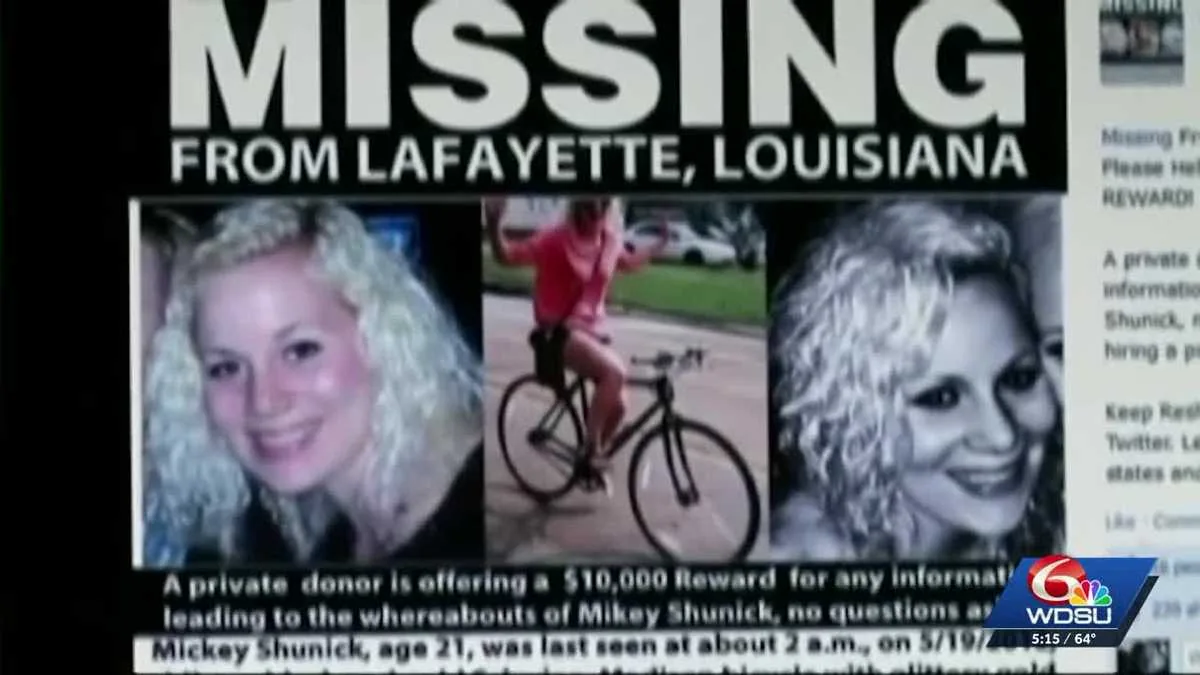
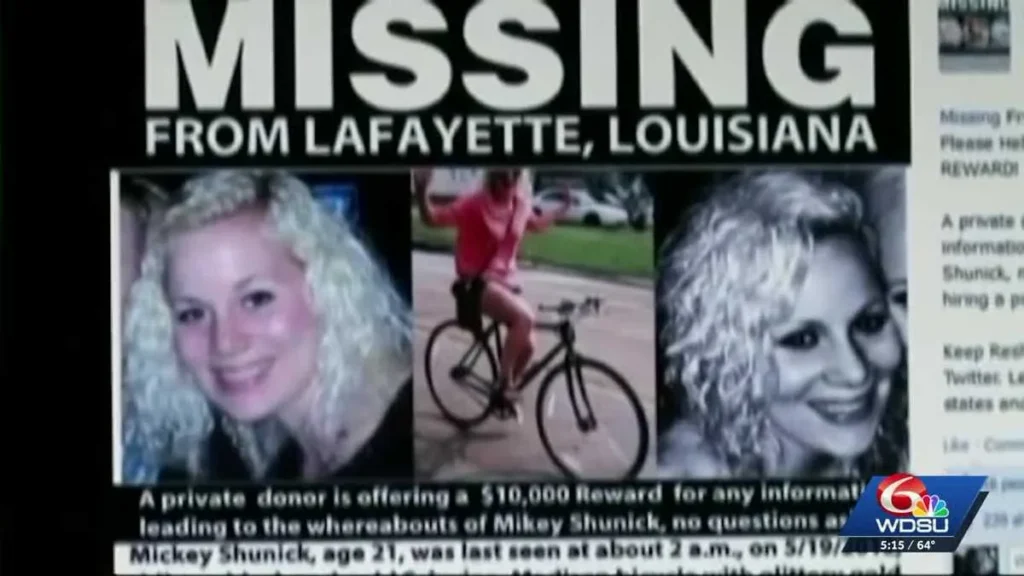
LAFAYETTE, LA — The disappearance of Michaela “Mickey” Shunick in 2012 changed her family’s life and pushed her sister, Charlie Shunick, into work she says she never expected to do. What began as a desperate search in Lafayette became a long-term mission centered on missing people, family support and better case strategy.
Charlie Shunick now says the experience gave her a duty to help others facing the same uncertainty. She founded the Resource Association for Missing People, known as RAMP, and has used it to assist families across the country. The work grew out of personal loss, but it has become a professional effort shaped by research, advocacy and repeated contact with law enforcement and relatives searching for answers.
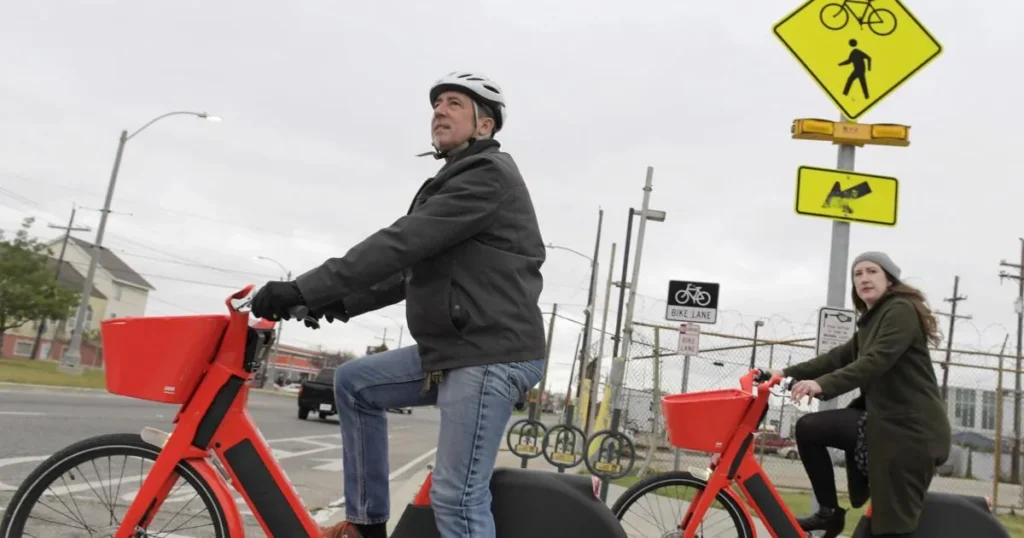
In May 2012, Mickey Shunick left a friend’s house on her bicycle and never returned home alive. Her disappearance quickly became a major event in Lafayette, where the search drew widespread attention and involved a large group of volunteers and investigators.
Charlie Shunick was part of organizing the search efforts while her family tried to manage the crisis. She described missing-person cases as complicated and full of moving pieces that families do not always see at first. The public attention surrounding the case grew intense, and the family was suddenly dealing not only with grief and fear, but also with a media frenzy that followed the case for years.
A video showing Mickey on her bicycle later became a key piece of evidence. It helped lead investigators to Brandon Lavergne, who was convicted in Mickey’s disappearance and murder. He was also convicted in the 1999 killing of Lisa Pate.
Charlie Shunick said the experience changed the direction of her life and pushed her to build a resource for other families. Through RAMP, she works with missing-person cases from across the United States and offers support at no cost to families seeking help.
She also serves as a consultant on missing-person cases and says she has worked on thousands of them. Her role can include helping families think through next steps, keeping a case active in public view and giving guidance that complements law enforcement work.
Shunick said she tries to apply her own method to each case by using data analysis and looking for pathways that may improve outcomes. She also works to keep families connected to the search process, especially when they feel overwhelmed by the amount of information and the pace of developments.
Outside of her advocacy, Shunick teaches biology at Delgado Community College. She said that background as a scientist helps her approach missing-person work in a more structured way, with an emphasis on evidence and organization.
Her goal is not only to support families emotionally, but also to help them understand how to sustain attention on a case and work with the information available. She said keeping a missing-person case in the public eye can matter both for law enforcement and for the surrounding community.
That perspective has helped define her work with RAMP. Rather than treating each case as an isolated crisis, she said she looks for patterns that can help families and investigators move forward. For her, the combination of science and advocacy has become a way to turn personal experience into practical support for others.
Shunick also points to what she describes as a disparity in attention and resources depending on who is missing. She referenced “Missing White Woman Syndrome,” calling it a media phenomenon that can shape which cases receive broad coverage and which ones do not.
She said media attention can influence what a community chooses to care about, and that imbalance can leave other families struggling for visibility. During the period when Mickey’s case was receiving heavy coverage, she said another Lafayette disappearance received little notice.
That case involved Kieosha Felix, who went missing a month before Mickey did. Shunick said she continues to say Felix’s name whenever she can, underscoring her belief that some cases are overlooked in ways that can make it harder for families to get help and public awareness.
Years after the case, Shunick says the public retelling of Mickey’s story can still be painful. She said true crime interest has kept the case alive in ways that do not always feel helpful to the people most affected by it.
Licensed Clinical Social Worker Natalie Bellott said people dealing with traumatic loss may need to decide where to draw boundaries as they try to move forward and make meaning from what happened. Bellott said unresolved cases can be especially difficult because families may never get every answer they want.
Shunick said that reality has forced her to accept uncertainty. Still, she said her work has helped her make sense of the loss and heal in small ways. By focusing on other families, she said she is honoring her sister while trying to spare others from the same pain.
She described the mission as a way to find purpose inside tragedy, with recognition that the emotional impact does not disappear just because time passes.