 111
 2
 3
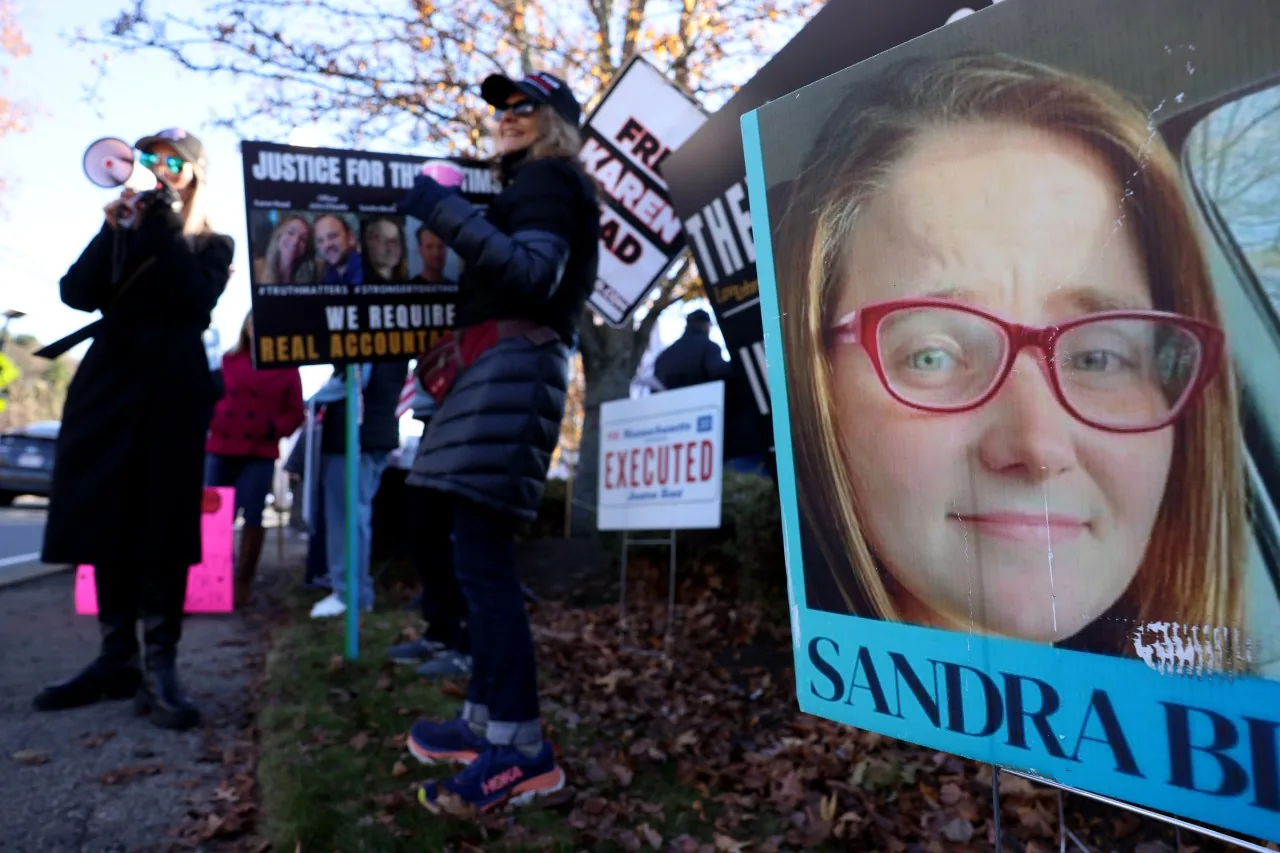
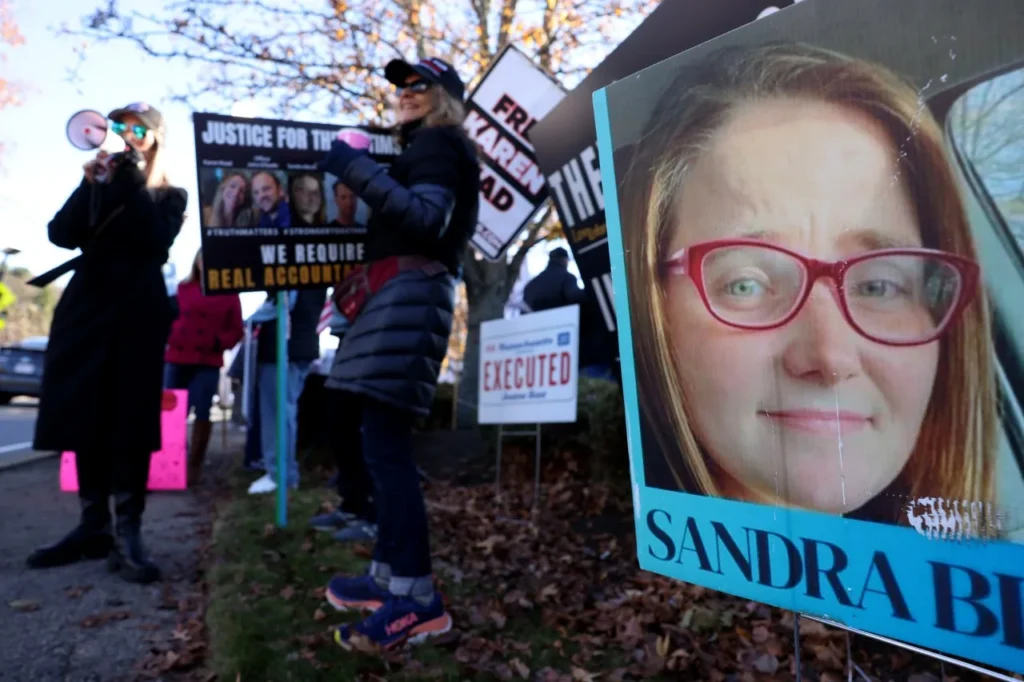
BOSTON, MA — Federal jurors in Boston are hearing the murder case of Sandra Birchmore, a 23-year-old Massachusetts woman whose death police initially ruled a suicide. Prosecutors say former Stoughton police detective Matthew Farwell killed her and tried to make the scene look self-inflicted after years of sexual abuse that began when Birchmore was a teenager.
The case has drawn scrutiny not only to Farwell, who is 40 and on trial in federal court, but also to the original local investigation. Federal prosecutors say police quickly accepted the suicide explanation, missed warning signs and failed to properly examine Farwell before treating the case as closed.
Farwell’s lawyers deny that he killed Birchmore. They acknowledge an affair, but say he is not a murderer and that Birchmore had been struggling with her mental health and was suicidal before she died.
When Birchmore was found dead in her Massachusetts home, police immediately concluded she had taken her own life. According to federal prosecutors, state police troopers working with the Norfolk County district attorney’s office stayed with that view and told others, including the medical examiner, that there was no foul play.
Assistant U.S. Attorney Torey Cummings told jurors the response was shallow from the beginning. He said Farwell was interviewed for only 15 minutes in a parking lot, with no notes taken, no injury check and no DNA sample collected. Investigators did review Farwell’s phone, but only after he had deleted his messages with Birchmore.
Prosecutors say that failure mattered because Birchmore’s friends never believed the suicide explanation. They told police she had recently learned she was pregnant and was excited about it. The person they believed was upset, they said, was Farwell.
The FBI began examining Birchmore’s death in 2023, helped along by concerns raised by a former deputy chief in Stoughton. Deputy Chief Brian Holmes had already led an internal affairs investigation into Farwell before the detective resigned.
Holmes’ review concluded Farwell had a sexual relationship with Birchmore, according to testimony at trial. Federal authorities later brought in expert Dr. William Smock, who said Birchmore was strangled with a duffel bag strap and struggled before she died.
That newer federal view sharply contradicted the original local ruling. The state medical examiner, relying in part on information from police, first listed the death as suicide. The office has since changed the official cause of death to undetermined.
Birchmore had once dreamed of becoming a police officer and took part in a Stoughton police mentoring program for children interested in law enforcement when she was 12. Farwell, then 24, later connected with her on Facebook, and the two eventually exchanged about 40,000 text messages.
Some of those messages were read in court. In one 2020 text, Birchmore said she would never forget the day they first had sex: April 10, 2013, when she was 15 and Farwell was 27. “Best day of my life,” she wrote. Farwell replied, “Me too.”
Prosecutors also introduced messages they say showed violent sexual fantasies. In one, Farwell wrote, “I’ll grab your throat and say you won’t say a word to anyone or you will be sorry.” The defense has not disputed that the pair had a sexual relationship, but it rejects the idea that Farwell killed her.
Prosecutors say the relationship became more volatile in 2020, when Birchmore pressed Farwell to get her pregnant and threatened to tell his wife about the relationship if he did not cooperate. After she became pregnant later that year, she sent him a message reading, “Congrats, we are going to be parents.” Farwell answered that he had “nothing to say.”
When Birchmore suggested that he should be present when the baby was born, he replied, “You are truly the worst person on the face of the earth.” Birchmore’s friend Leslie Davis testified that the pair fought and that Birchmore told her Farwell had pushed her to the ground.
Davis also said Birchmore wanted Farwell to identify himself as the father on a birth certificate, but he refused. According to Davis, he told Birchmore, “That’s not my baby.” Prosecutors say the pregnancy gave Farwell a motive to silence her.
In January 2021, a woman called Stoughton police to report Farwell’s relationship with Birchmore. Farwell was furious, and in a text to Birchmore he wrote, “You have no idea how bad what she did is.” Twelve days later, on Feb. 1, 2021, he asked if he could stop by Birchmore’s apartment.
Security video showed Farwell entering the building at 9:14 p.m. A digital forensics expert testified that Birchmore’s phone stopped moving at 9:40 p.m., three minutes before lobby video showed Farwell leaving. Prosecutors say that window was when he killed her to keep their relationship from coming to light.
Cummings told jurors that Farwell had lost control of Birchmore and needed “a way to silence her permanently.” Birchmore was about eight weeks pregnant, according to prosecutors.
Farwell’s lawyer, Kimberly Stevens, told jurors that Birchmore had a long history of mental health struggles. She said Birchmore began psychiatric medication at age 6, attempted suicide as a teenager and was in a desperate state after learning she was pregnant.
Stevens said Birchmore was alone over the holidays and had less than $3 in her bank account. She argued that Farwell went to her apartment to break up with her, not to kill her. “Matthew did not kill Sandra Birchmore,” Stevens told the jury.
One of Farwell’s attorneys also told jurors that he “had an affair,” but urged them to distinguish that misconduct from homicide. The defense is expected to continue calling witnesses before the case goes to the jury next week.