 111
 2
 3
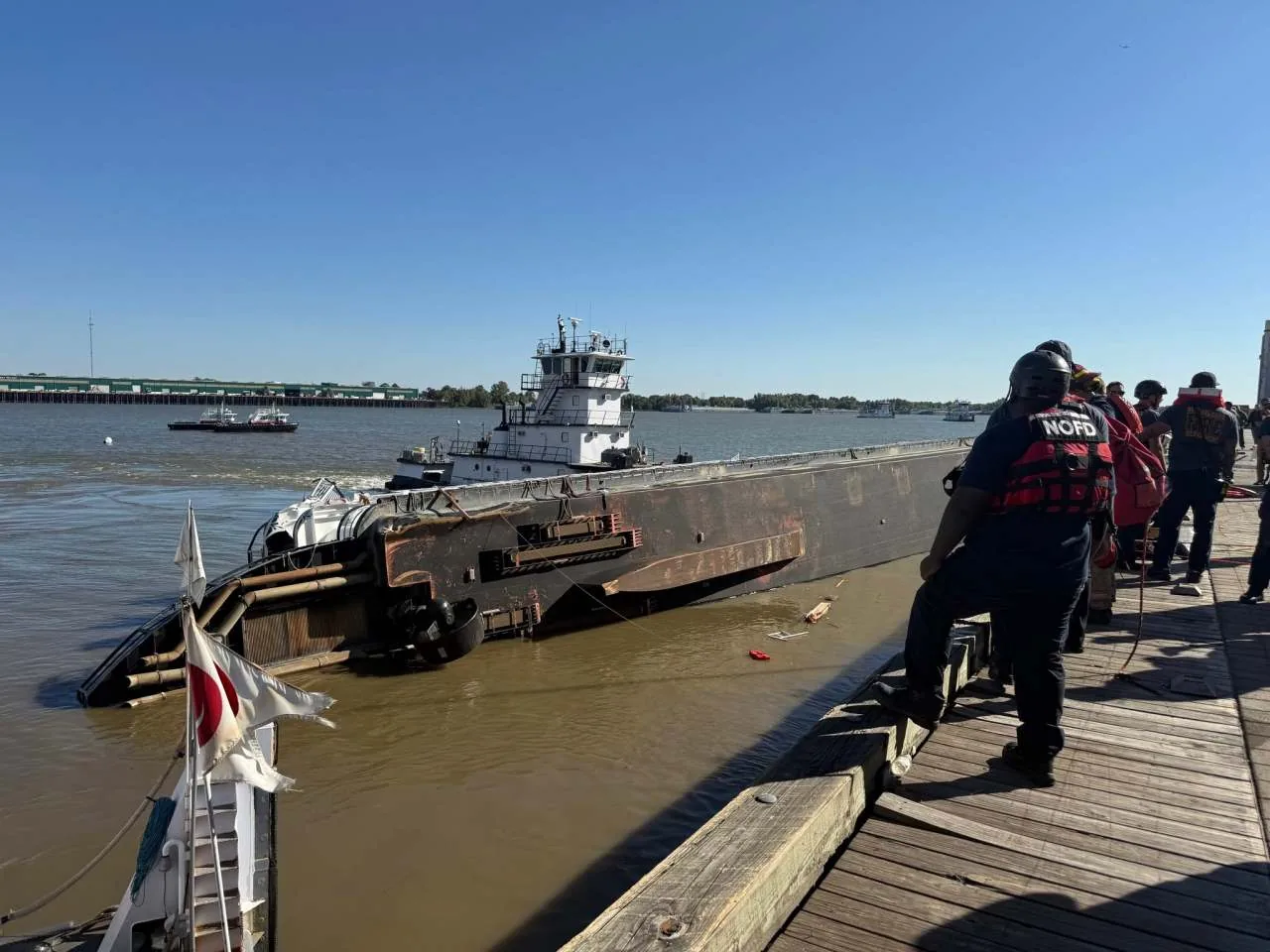
NEW ORLEANS, LA — One week after a tanker crash on the Mississippi River, New Orleans officials said one person remained hospitalized on Friday, Nov. 20. The update came after a collision involving the Atlantic Asphalt tanker and the American Cruise Lines vessel American Heritage that sent dozens of people for treatment and triggered a wave of rescue, recovery and legal action.
City officials have described the response as an extraordinary save. Mayor Helena Moreno called it a “Miracle on the Mississippi,” saying about 100 people were pulled from the river by first responders. While the city said all passengers and crew on the American Heritage were accounted for, the crash has left lingering injuries and an active federal investigation.
When the crash happened on Nov. 13, officials said 32 people received treatment at a hospital after the collision. On Sunday, city officials reported that five of those patients remained hospitalized, including three in stable condition and two in serious condition.
By Friday, the number had fallen again. The city said one person was still hospitalized, though it did not provide additional details about that patient’s condition. The reduction suggests many of the injured have been discharged, but officials have not given a full accounting of every person treated after the incident.
The crash drew rapid attention because of the scale of the rescue effort and the number of people affected on the river. New Orleans leaders have framed the incident as one in which emergency crews prevented a far more devastating outcome.
The crash involved the Atlantic Asphalt tanker and American Cruise Lines’ American Heritage. According to city officials, everyone aboard the American Heritage was accounted for after the collision, a key detail as rescue crews worked along the riverfront and in the water.
Officials said the rescue effort was extensive, with first responders helping bring roughly 100 people out of the Mississippi River. The response included treatment for injuries and the coordination needed to make sure passengers and crew members were located quickly after the crash.
The incident happened in the busy river corridor that runs through New Orleans, where commercial traffic and passenger vessels share the waterway. That setting has also shaped the city’s ongoing recovery work and the safety restrictions now in place near the crash site.
Legal action began days after the collision. On Sunday, Nov. 15, the Port of New Orleans announced a lawsuit seeking to place a maritime lien on the tanker Atlantic Asphalt. That filing alleges the crash was caused by negligence.
The next day, four crew members aboard the American Heritage filed a federal lawsuit against the tanker’s owners and management company. Their complaint also alleges negligence and says unsafe operating conditions contributed to the collision. The filing marked the first crew-led legal challenge reported after the crash.
On Friday, Nov. 20, another lawsuit was filed by a Pennsylvania couple who said they were injured in the crash. Attorneys Rico Alvendia, Anthony Irpino and Walter Leger, along with Pennsylvania attorney Robert Moran, said the suit was filed in Orleans Parish Civil District Court against Nave Shipping S.A. and Thome Ship Management PTE LTD.
City officials said their on-site response and recovery operations ended on Wednesday, Nov. 18, but work on the river has not stopped. Salvage operations are continuing under Unified Command, which is overseeing the remaining response efforts connected to the crash.
Crews began removing fuel from the American Heritage on Tuesday, Nov. 18, as authorities worked to address the vessel and manage the aftermath of the collision. Officials have also kept a safety zone in effect on the Mississippi River between mile markers 95.5 and 96.5.
The restricted area extends 500 feet from the east bank, and the alternate channel remains closed to maritime traffic. Those measures show that the crash continues to affect navigation in a major commercial waterway even as the visible emergency response has wound down.
The National Transportation Safety Board is continuing its investigation into the crash. Federal investigators have not announced a cause, and the case remains active as authorities examine what led the tanker and cruise ship to collide on the Mississippi River.
For now, the picture is one of partial recovery and unresolved questions. One person remains in the hospital, salvage work is still underway, and multiple lawsuits are moving through the courts while investigators piece together the sequence of events.
The crash has already left a strong mark on New Orleans, both because of the size of the rescue effort and because of the legal and operational consequences still unfolding along the river.
Officials’ initial account emphasized how many people were saved quickly after the collision. Moreno’s description of a “Miracle on the Mississippi” captured the city’s view of the emergency response, especially after dozens of people were taken for hospital treatment and rescue crews pulled more than 90 people from the water.
Even so, the aftermath has stretched beyond the immediate rescue. The remaining hospitalization, the ongoing salvage operation and the lawsuits all point to a case that is still developing on several fronts. For New Orleans, the crash has shifted from a dramatic emergency into a lengthy recovery and accountability process.
With the National Transportation Safety Board still investigating, officials have not yet provided a final explanation for the collision. The court filings may also expand as injured passengers, crew members or companies involved in the crash pursue additional claims.
For now, the most concrete updates are the ones city officials have provided: one person remains hospitalized, the safety zone stays in effect, and salvage work continues under Unified Command. Those steps suggest the collision’s effects are still being managed even after the city’s on-site emergency response ended.