 111
 2
 3
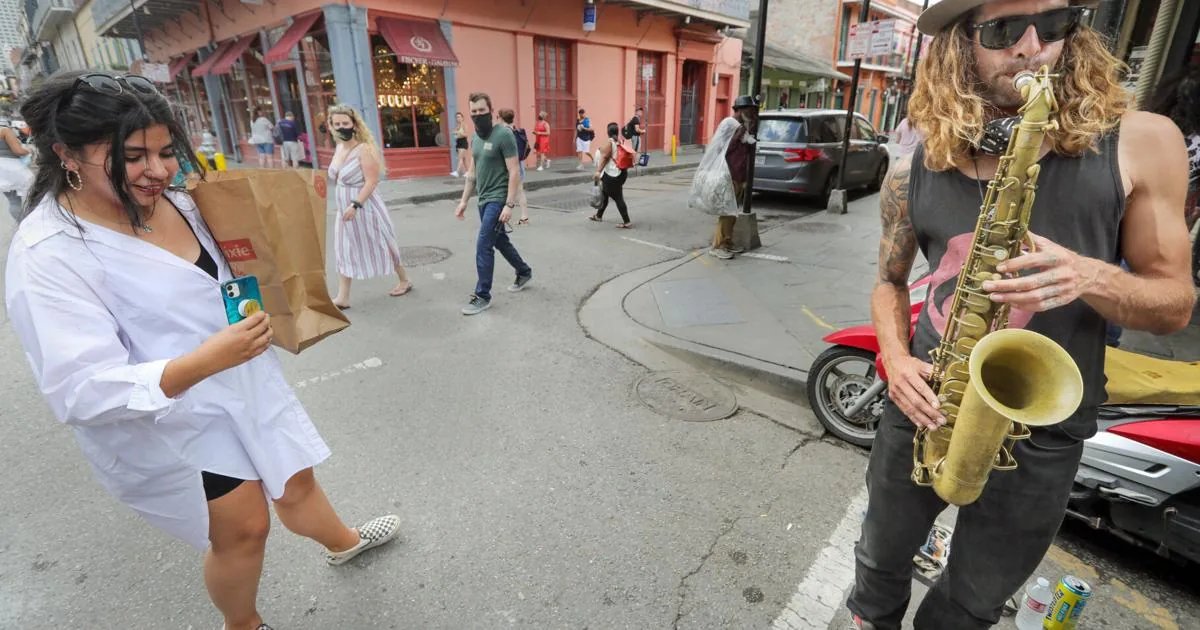
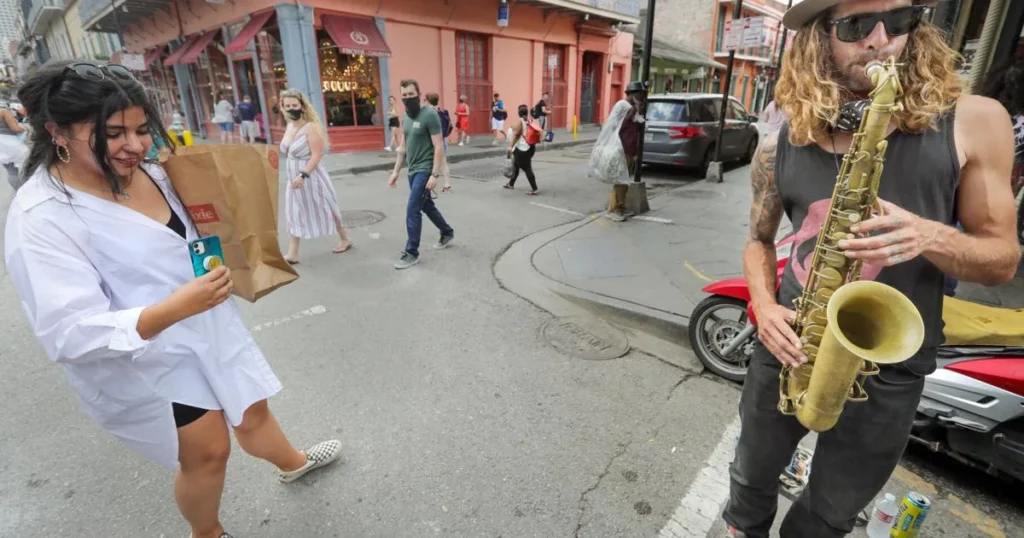
NEW ORLEANS, LA — New Orleans City Council members blasted Louisiana State Police on Thursday for stepping up enforcement against street performers in the French Quarter, arguing that musicians and other buskers are being unfairly targeted.
At the same meeting, however, the council unanimously approved a 2027 budget for the French Quarter Management District that nearly doubles state patrol funding in the neighborhood. The vote came after nearly an hour of debate, as more than a dozen musicians, dancers and tarot card readers spoke against the crackdown and the budget increase.
City officials say the renewed patrols are meant to address blocked sidewalks, business entryways and other quality-of-life concerns. Critics say the enforcement threatens free expression and is being applied too aggressively to people making a living in one of the city’s most visible public spaces.
The council’s 6-0 vote approved the French Quarter Management District’s 2027 budget, which raises State Police patrol funding from $260,000 to $600,000. Most of that money comes from state appropriations, with $150,000 paid through local taxes.
The budget increase is intended to support officers responding to public safety and quality-of-life issues in the neighborhood, according to a July proposal from the Louisiana Department of Public Safety and Corrections. Those issues include sidewalk obstructions, vending concerns and other complaints that have long shaped the debate over enforcement in the Quarter.
The management district has also backed other police initiatives in recent years, including expanded patrols and a remote-piloted drone program. Supporters argue those steps help protect residents, visitors and businesses. Critics counter that the city is leaning too heavily on enforcement instead of finding a better balance for the area’s street culture.
8th District Capt. Samuel Palumbo said the renewed push began last week after complaints from business owners and visitors about blocked sidewalks and entrances. He said the aim is to keep the French Quarter functioning for everyone, not to eliminate street performances.
In a statement, Louisiana State Police said Troop Nola is working with the New Orleans Police Department’s 8th District to enforce laws and ordinances tied to sidewalk obstructions and other quality-of-life issues. The agency said the effort is focused on keeping public areas open to residents, businesses, visitors and emergency responders.
Palumbo framed the operation as an effort to make sure the neighborhood can operate smoothly. State officials have long said the patrols are meant to respond to conditions in the district rather than to target performers as a group.
Several performers described tense encounters with officers during the council meeting. Musician Sariyah Idan said she was taking a break near Royal and St. Louis streets on Saturday night when five State Police officers told her she was blocking the sidewalk.
Idan said there was room for people to pass and that she began packing up her guitar. She said an officer later told her he was being nice and could have put her in jail if he wanted to. Idan told council members that she had been moved along before, but this was the first time she felt threatened with arrest.
Clarinetist Doreen Ketchens also pushed back, saying she did not understand why officials would focus on street performers when the city has so many other problems. She argued that musicians are part of what makes New Orleans appealing to visitors and said city leaders often showcase performers when promoting the Quarter.
Council President JP Morrell was one of the harshest critics of the enforcement effort, calling it “completely and totally ridiculous” and pointing to performers’ free speech rights. He told Palumbo that state troopers should be focused on crime, not musicians performing in public.
“Stay in your lane,” Morrell said, urging the captain to make clear to officers that busking is not a criminal offense. Other council members who spoke during the meeting echoed that frustration, saying the city should not allow street performers to be treated like nuisances simply because they are visible and noisy.
Freddie King, who represents the French Quarter, said buskers are as important to the neighborhood as any resident or business. Council Vice President Matthew Willard called the crackdown embarrassing and said he would support putting the sweeps on hold until a clearer plan is in place.
Mayor Helena Moreno said her administration wants to support musicians while also addressing complaints about disorder in the French Quarter. She said protecting cultural traditions and dealing with quality-of-life problems should work together, not compete with each other.
Moreno added that her team has already met with musicians who attended the council meeting and plans more discussions. Her statement suggested the city wants performers involved in any longer-term solution rather than leaving them out of the process.
Deputy Mayor for Public Safety Michael Harrison said State Police are allowed to enforce municipal laws and that summonses are usually handled in Municipal Court. He said city officials have been working with state police, the city attorney and the district attorney’s office on the issue for some time, and that he is willing to raise the concerns heard at Thursday’s meeting with state police leadership.
The dispute reflects a broader tension in the French Quarter, where expanded patrols have drawn support from people who want cleaner sidewalks and more visible enforcement, and criticism from those who say the city is policing public space too aggressively.
Local leaders have expanded law enforcement presence in the neighborhood in recent years to address problems ranging from noise complaints and unpermitted vending to violent crime. Supporters say those efforts help maintain order in a major tourist district. Opponents say they often fall hardest on performers, vendors and unhoused people.
Idan said the problem may be less about bad actors than about confusion over how different agencies interpret the rules. She argued that officers need to get on the same page about the ordinances affecting performers and enforce them consistently if the city wants to avoid repeated confrontations.